
Puncture repairs
Inner tube replacement
Tyre replacement
Slow punctures
Damaged or worn tyres
Valve problems
Tyre and tube checks
Finding the cause of repeated punctures
Checking rims and rim tape
Tubeless tyre repairs and setup
Puncture repairs from £15
[CALL 01923 590216]

How to Fix a Bike Puncture Yourself
1. Remove the wheel
If possible, shift the gears before removing the rear wheel so the chain is on the smaller rear sprocket.
Release the brakes if necessary and remove the wheel from the bike.
If you're unsure how to remove your particular wheel, check your bike manufacturer's instructions.
2. Let the remaining air out
If there is still air in the inner tube, press the valve to release it.
This makes it easier to remove the tyre.
3. Remove one side of the tyre
Use a tyre lever to carefully lift one side of the tyre over the rim.
Work your way around the wheel until one side of the tyre is outside the rim.
Don't use a screwdriver — it can damage the tyre, tube or rim.
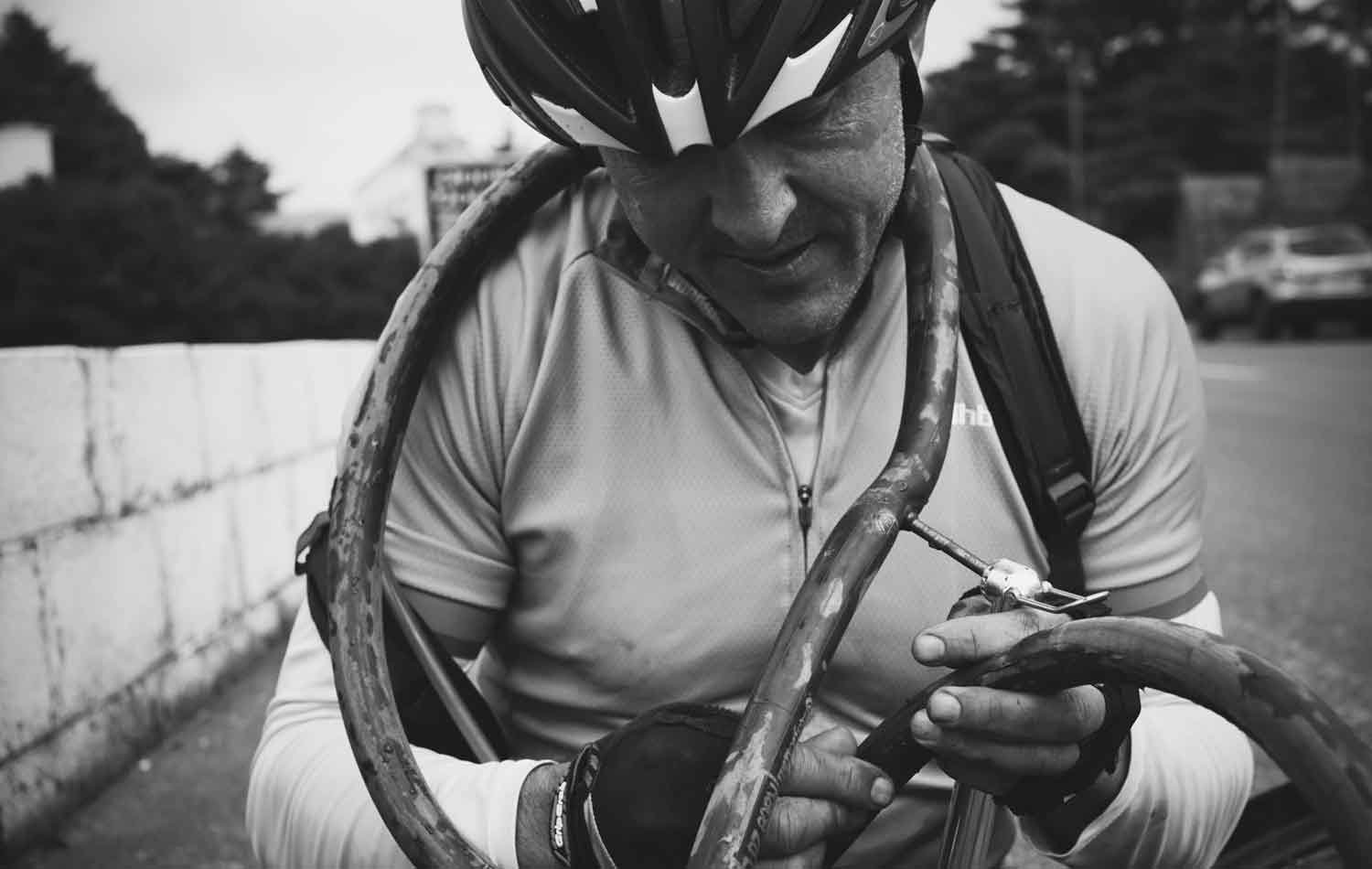
4. Remove the inner tube
Once one side of the tyre is off the rim, carefully pull the inner tube out.
Take care around the valve.
7. Fit the new or repaired tube
Put a small amount of air into the tube so it has some shape.
Insert the valve through the hole in the rim and carefully place the tube inside the tyre.
Make sure the tube isn't twisted or trapped.
8. Put the tyre back on
Starting near the valve, work the tyre bead back inside the rim.
Use your hands wherever possible.
Take care not to pinch the inner tube between the tyre and the rim.
Avoid using a tyre lever for the final section if you can, as it's easy to trap and damage the new tube.
9. Inflate the tyre
Inflate the tyre gradually and check that it is sitting evenly around the rim.
Look at the line around the tyre sidewall. It should sit at a similar distance from the rim all the way around.
Then inflate the tyre to the pressure recommended on the tyre sidewall.
10. Check everything before riding
Before setting off:
Check the tyre is seated correctly
Check the tyre pressure
Make sure the wheel is securely fitted
Check the brakes
Make sure the wheel spins freely
Check that there are no obvious cuts or damage to the tyre
If everything looks good, you're ready to ride.
Puncture & Tyre Repairs at Riverside Cycles
At Riverside Cycles, we provide friendly, practical advice and professional bike repairs from our independent workshop in Watford.
Puncture repairs from £17.
If you're not sure what your bike needs, don't worry — just bring it in or give us a call.
Riverside Cycles
14 Riverside Works
Riverside Road
Watford
WD19 4HY
01923 590216
[BOOK YOUR BIKE IN]
[CALL 01923 590216]
Need help with a puncture?
Don't let a flat tyre keep your bike off the road. Bring it to Riverside Cycles and we'll help get you riding again.
Puncture & Tyre Repairs
A flat tyre can stop a ride in its tracks. At Riverside Cycles, we repair punctures and replace tyres and inner tubes for all types of bikes.
Whether you've picked up a thorn, glass or another sharp object, or your tyre is simply worn out, we can inspect the problem and get your bike safely back on the road.
We can help with:
What We Need From You
If you're bringing your bike in with a puncture, don't worry if you're not sure what has caused it. You don't need to know the technical name for the problem.
It helps if you can tell us:
What happened?
For example:
Did the tyre suddenly go flat?
Has it been losing air slowly?
Did you get a puncture while riding?
Has the same tyre gone flat more than once?
Have you recently fitted a new tyre or inner tube?
What type of bike is it?
If you know, let us know whether it's a:
Road bike
Mountain bike
Hybrid
Gravel bike
E-bike
Children's bike
Commuter bike
Don't worry if you're not sure — we can identify what you need when we see the bike.
If you know the tyre size
The tyre size is normally printed on the sidewall of the tyre. It may look something like:
700 x 28c
or
26 x 2.1
A photo of the tyre sidewall can also be helpful if you're contacting us before bringing the bike in.
5. Find what caused the puncture
This is one of the most important steps.
Before fitting a new tube, carefully check the inside of the tyre for:
Glass
Thorns
Sharp stones
Wire
Metal
Other objects
Run your fingers very carefully around the inside of the tyre, or use a cloth to help find anything sharp.
Also check the rim and rim tape for damage.
If you don't remove the object that caused the puncture, your new tube may go flat again.
6. Check the old tube
If you're repairing rather than replacing the tube, inflate it slightly and listen and feel for escaping air.
You can also put the tube in water and look for bubbles.
Once you've found the hole, mark it and follow the instructions on your puncture repair kit.
When Should You Bring Your Bike to Us?
Some punctures are simple to fix, but repeated punctures can be a sign that something else is wrong.
Bring your bike into Riverside Cycles if:
Your tyre keeps going flat
You can't find the cause of the puncture
The tyre has a large cut or damaged sidewall
The rim is damaged
The inner tube keeps failing
You have a tubeless tyre problem
You're not confident removing the wheel
You simply don't have the tools or time to do it yourself
We'll check the tyre, tube, rim and surrounding components to find the problem rather than simply fitting another tube.
Puncture or New Tyre?
A puncture doesn't always mean you need a new tyre.
If the tyre itself is in good condition, replacing or repairing the inner tube may be all that's needed.
However, a tyre may need replacing if it is:
Worn down
Cracked
Cut
Bulging
Damaged on the sidewall
Continually causing punctures
Showing signs of age or deterioration
If you're unsure, bring the bike in and we'll take a look.